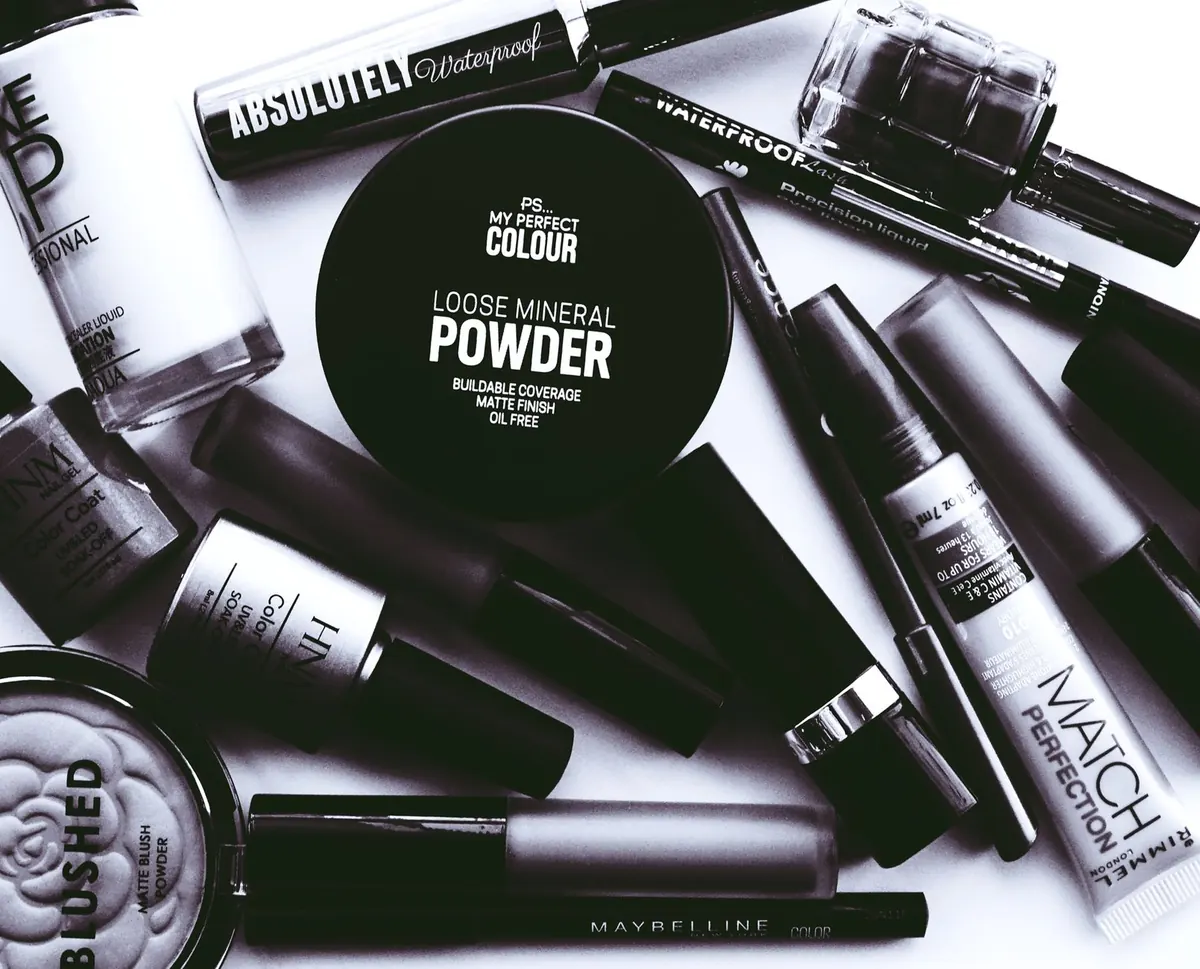
Walk into a drugstore and you can build an entire face for roughly what one luxury serum costs. Walk up to a department store counter and you can spend that same money on a single lipstick that feels like nothing going on. Both aisles sell results, and both sell a feeling. The useful question isn't which side is better. It's what you're paying for when the price jumps, and which parts of that price you can skip without noticing.
1. Ingredients: The Formula Behind the Price
Most of what a cosmetic does comes from a short list of workhorse ingredients. Humectants like glycerin pull water into the skin, occlusives like petrolatum and dimethicone hold it there, and actives such as niacinamide, salicylic acid, retinol and vitamin C do the job printed on the front of the box. You'll find all of them at both ends of the price spectrum.
What changes with price is usually the supporting cast. Budget formulas lean harder on silicones and simple emulsions, which is why a cheap foundation can feel slippy or a cream can sit on top of the skin instead of settling in. Expensive formulas tend to invest in texture, in packaging that keeps a fragile active stable, and in higher concentrations of ingredients that genuinely cost more to source.
None of that makes the price tag a substitute for reading the label. Ingredients appear in descending order of concentration until the 1% mark, after which the order is flexible. If the hero active sits below the preservative, the marketing is doing more work than the formula.
One boundary worth respecting: over-the-counter products handle texture, tone and mild breakouts. Persistent acne, rosacea or pigmentation is a dermatologist conversation, not a shopping decision.
2. Packaging: Protection Versus Theatre
Packaging has three jobs: keep the formula stable, dispense it cleanly, and look like something you want on your shelf. The first two justify money. The third is decoration.
An opaque airless pump for a retinol serum is a real cost with a real benefit, because light and oxygen break those formulas down. A frosted glass jar with a metal lid does the opposite: you dip a finger in, and every opening is another hit of air. It photographs beautifully and performs worse.
Droppers sit in the middle. They look clinical and let you dose precisely, but each removal exposes the whole bottle. Store one away from a sunny windowsill and don't leave the cap off while you reach for a towel.
Two questions separate useful packaging from expensive packaging:
- Can you get the last of it out? A tube you can cut open beats a pump that quits with a week of product still inside.
- Does it let you control the amount? A dispenser that releases a whole face's worth per press is a design flaw, not a luxury.
3. Shade Range: Where the Gap Still Shows
Foundation and concealer are the categories where the two sides separate most sharply. Many drugstore lines have widened their ranges considerably, but in-store stock rarely keeps pace: the deepest and palest shades sell out first, and plenty of locations only carry the middle. High-end counters tend to hold more shades on the shelf and can hand you a sample to take home.
If your match is hard to find, don't guess. Get matched once at a counter in daylight rather than under the store's warm bulbs, then ask for a sample pot and wear it for a full day before committing. Photograph the label of anything that works. That reference is what lets you shop drugstore later with confidence instead of hope.
Undertone matters more than the number on the bottle. A shade can be the right depth and the wrong temperature, which is why two "medium" foundations can look like they belong to different people. In categories where matching is less critical — lip liner, brow pencil, mascara, clear gloss — the drugstore isn't a compromise at all.
4. Long-Term Value: Cost Per Use, Not Price Tag
A product's real cost is its price divided by the number of times you use it before it expires or gets abandoned. That math flips the usual argument.
The products you finish are the ones worth upgrading.
A drugstore mascara you replace every three months on schedule is cheaper than a luxury tube you stretch for a year because it cost too much to throw away. A foundation that matches perfectly and needs no mixing beats three budget bottles that each failed. A serum that pills under your moisturiser and stays in the drawer is expensive at any price.
- Track what you actually finish. Those are the products worth spending more on next time.
- Buy for the routine you have, not the one you imagine. If you never wear eyeshadow, an expensive palette is a museum piece.
Sunscreen deserves its own note. Because protection depends on applying enough, the best one is whatever you'll use generously and reapply without resenting it — usually the lighter, cheaper bottle you can afford to go through every few weeks.
5. Where the Splurge Usually Earns Its Keep
Price isn't a proxy for quality, but some categories reward spending more consistently than others.
- Base makeup. Shade matching, sample availability and finish options improve as you move up, and it covers your whole face.
- Fragrance. Concentration and staying power track price more closely here than almost anywhere else, because the juice is the product.
- Nightly treatments. Stable packaging, pleasant texture and a concentration your skin tolerates matter when something touches your face every day.
- Anything you know you'll finish. If it's already part of your routine, pay for the version you enjoy using.
And the categories where drugstore is the smart default: mascara, cleansers that rinse off within a minute, body lotion, hand cream, lip liner, brow pencil and cotton rounds. None of them stay on your skin long enough, or need to look good enough, to justify a counter price.
How to Split the Budget Without Guesswork
Choose two categories to spend on — usually base makeup and one treatment you use daily — and let the rest come from the drugstore. Then put the savings into the unglamorous things: sun protection, replacing mascara on schedule, and buying enough of what works that you stop experimenting out of boredom.
Before any purchase, ask three questions. Does this suit or match me? Will I finish it? Does the packaging let me use all of it? Two yeses is enough. Keep a note of the exact shades and formulas that work, and drugstore shopping becomes a rerun rather than a gamble.
If your skin is reacting, changing, or ignoring everything on the shelf, book an appointment with a dermatologist. No price bracket replaces a proper diagnosis.
Photo: Suzy Hazelwood / Pexels